

Venus could once have been whole oceans of water
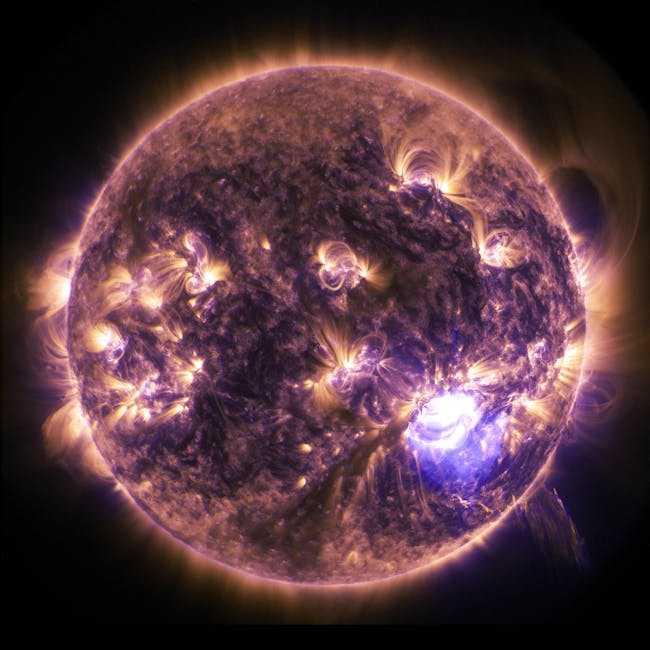
We used to think that among the planets of the solar system only Mars, unless, of course, we take into account the Earth itself, could once be a haven for life. However, according to the latest data, our larger neighbor, Venus, could also once have had oceans of water. New computer simulations, the results of which are described in the scientific journal Journal of Geological Research: Planets, indicate that Venus is a great example of the result of the so-called "runaway" greenhouse effect and could once have a gigantic ocean on its surface.
The publication reports that if there was an optimal combination of the atmosphere of the early Venus, in which there was carbon dioxide and water, the planet would be suitable for life. In the framework of earlier studies conducted last year by the astrophysicist of the Goddard Institute for Space Research, Michael Wye, similar computer simulations were also performed. Then they showed that with a slower rotation of Venus around its axis, which was 116 terrestrial days (the current figure is 146 days), this feature would make it possible to form a fairly dense cloud layer above the planet about 715 million years ago, with an average surface temperature of 15 degrees Celsius. Given that the current surface temperature of Venus is 460 degrees, it is not surprising that this opportunity is very interested scientists.
So once Venus could look. At least according to computer models
Continuing to investigate this issue, planetologist Emmanuel Marsik of the University of Versailles-Saint-Quentin-en-Yvelines (France) and his colleagues used computer simulations to see how particles of cooled molten lava could interact with sunlight streams passing through the evolving atmosphere of the planet. The results showed that even at the current level of carbon dioxide, Venus required only 10 percent of the mass of the earth's water in order to form an ocean on its surface.
"This work is aimed at a clearer understanding of the potential for the habitation of exoplanets," Way shared in an interview with Science News.
Marsik, in turn, added that the question of whether there were once on Venus oceans, is still a matter of heated debate.


No comments:
Post a Comment